Accessibility and inclusive design.
Ensuring your website is accessible isn’t just about compliance, it’s about creating an inclusive experience for all users, regardless of ability. At We Create Digital, we specialise in designing and developing accessible and inclusive websites, that meet WCAG level AA or AAA, as well as carrying out detailed accessibility reviews to help businesses and public sector organisations improve their digital presence and maximise their audience.
With a CPACC qualified member of staff and a great team of advocates for accessibility we are ready and waiting to help. Whether you’re starting fresh or looking to improve an existing site, our accessibility services can help you create an online presence that is compliant, inclusive, and future proof.
Audits and remediation
We provide automated accessibility audits and comprehensive accessibility reviews. We help large organisations resolve issues quickly and ensure full compliance.

WCAG 2.2 compliance
Our team helps organisations build, test, and maintain WCAG 2.2 compliant digital products, ensuring accessibility for users with disabilities.
Please contact us directly to learn more about WCAG 2.2 certifications.

Sector requirements
Sectors such as healthcare, eCommerce within Europe and the UK public sector have specific requirements including keyboard navigation, screen reader compatibility, 300% zoom capability, and high-contrast, readable text.
Accessibility from the start.
As a web accessibility agency, we build accessibility into every stage of the web design and development process from the start. Our approach follows WCAG (Web Content Accessibility Guidelines) criteria and best practices, ensuring that your website is usable for people with disabilities, including those who rely on screen readers, keyboard navigation, or alternative input methods. We also consider inclusive design.
We focus on:
- Clear and logical structure: making navigation intuitive and easy to follow
- Colour contrast and readability: ensuring text is legible for all users
- Keyboard accessibility: designing for users who cannot use a mouse
- Alternative text and multimedia support: making images, videos, and audio content accessible
- Form and interaction design: ensuring forms, buttons, and interactive elements work smoothly for all users

Accessibility auditing and strategy.
Our accessibility services make it easy for your team to manage an inclusive website, with clear guidelines and accessible design practices integrated into each project. As you continue to develop or work on your website, it is vital to ensure your digital presence remains accessible, up-to-date and aligned with the latest standards. We can help you build a strategy, so accessibility is always a priority.
If you have an existing website, we offer detailed reviews to help you understand its current accessibility status and areas for improvement. Our audits include:
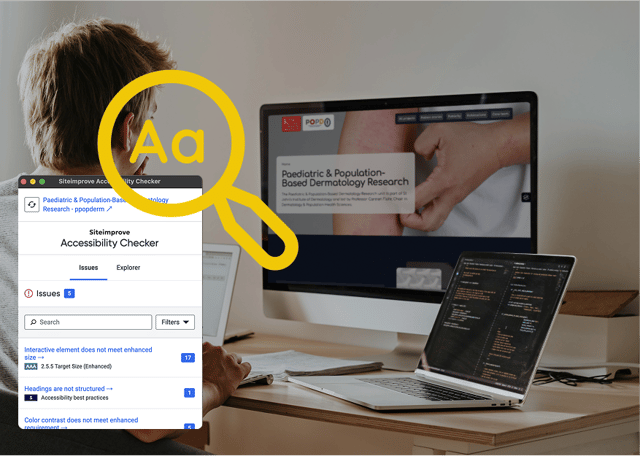
- Automated testing using trusted tools
- Manual testing with keyboard-only and screen reader methods
- Detailed reports and actionable recommendations to enhance accessibility
- Ongoing support and training to help your team maintain accessibility best practices
We’ve even developed our own accessibility testing tool, as we wanted to create a low-cost option for organisations to be able to use, so accessibility can become more accessible itself.
Support with accessibility compliance.
Many organisations we speak to are looking for the best accessibility agencies for website compliance. This is because they don’t know if their site is compliant, have been told their website isn’t WCAG compliant, but don’t know where to start, or they know their website is accessible in some places but not others.
We can act as a partner to guide you, rather than just dump a 100 page PDF showing the results of an audit. We will create a strategy that is easy to implement while working with you to provide immediate fixes to priority areas. This can be a long-term relationship, to ensure that you become compliant, and remain that way.
Furthermore, if you’re concerned about a PSBAR audit, then we can run a mock audit to help spot any errors.
Meeting legal accessibility obligations across the UK and EU.
Complying with accessibility guidelines is also a legal requirement for public sector bodies in the UK, and we have supported many organisations in meeting these standards.
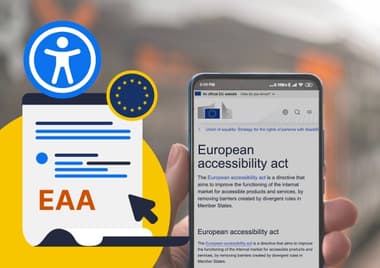
New regulations are also now in place under the European Accessibility Act (EAA). While the EAA does not apply to organisations operating solely in the UK, it will impact those working across the EU. Businesses must comply with the Act by 28 June 2025 – there are some exclusions, but these need to be carefully checked to see whether they apply to your business. Given this, it is crucial that organisations put in place plans to make their websites fully accessible.
Why accessibility matters for business growth.
Accessibility helps businesses reach a wider audience, improving user satisfaction and loyalty while increasing revenue and sales potential.
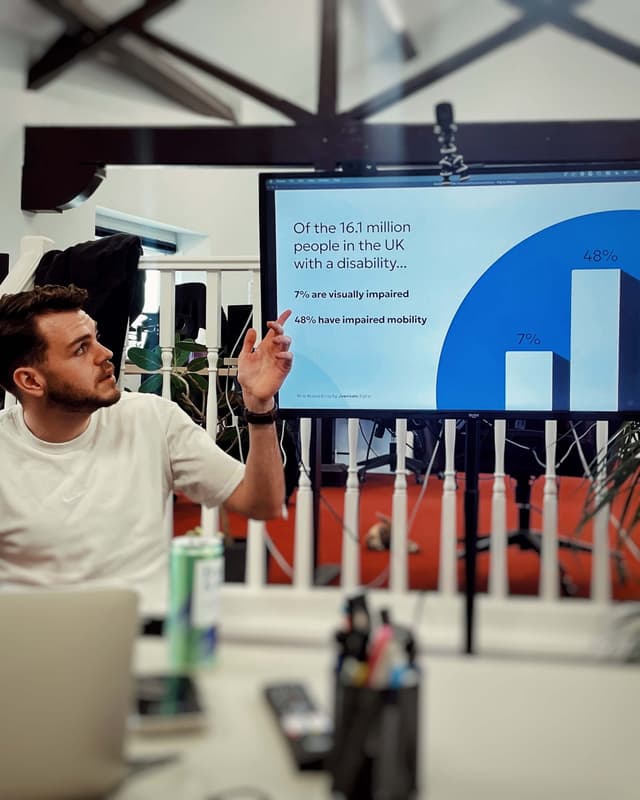
A 2019 report found that 69% (4.3 million) of disabled internet users clicked away from websites with accessibility barriers. The organisation behind the report also found that as a result of these barriers, £17.1 billion of revenue was lost to retail websites. As a digital accessibility agency, we can identify where you may be losing users and make improvements to your website to remove those blockers.
Accessibility features are particularly valuable in customer-facing industries, where compliance supports inclusivity and meets the needs of all users, an expectation that continues to grow among UK consumers.
Accessibility training.
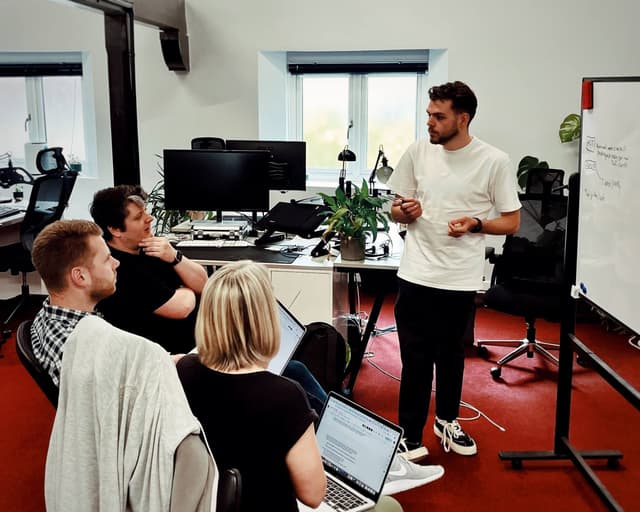
If you want to ensure your brand and website remain accessible, we provide tailored accessibility training. This empowers your team to build inclusively by default. Our sessions combine practical workshops, strategy development, and clear internal guidelines to help you embed accessibility into every stage of your process. We also offer ongoing support and scheduled reviews to help you stay compliant and maintain accessibility standards as your organisation evolves.
We believe accessibility is more than meeting regulations. By focusing on inclusivity, we help your organisation create a smoother, more welcoming experience for every user, while strengthening your brand’s reputation.
Our website accessibility portfolio.
Take a look at some of our accessible projects
Explore a selection of our recent projects, including work with public sector organisations where accessibility and compliance were essential from day one. These case studies show how we design and build for real users, meet strict standards, and support teams who need reliable, inclusive digital services.







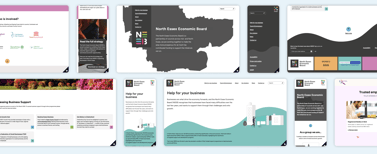

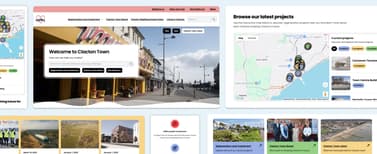

Supporting organisations to make websites accessible




Make your website more accessible today
Whether you need a new website designed with accessibility in mind or want to improve your existing site, we’re here to help. Get in touch to find out how we can support you in creating a more inclusive digital experience that reaches more users.
Website accessibility FAQs.
We work to WCAG 2.2 AA as the baseline, but we can ensure you have a website that is the level you are looking for – whether it is A or AAA. Our team regularly refers to the Public Sector Bodies Accessibility Regulations and relevant GDS guidance, as well as keeping up to date with any developments.
Website accessibility means designing and building websites so that everyone can use them, including disabled people. An accessible website can be used with a screen reader, a keyboard alone, voice control or magnification, and its content is clear, readable and easy to navigate. It’s part of digital accessibility, which also covers apps, documents and other digital services.
Around 16 million people in the UK are disabled, about a quarter of the population, according to the government’s Family Resources Survey. Accessibility covers visual, hearing, motor and cognitive needs, as well as temporary limitations such as a broken arm. It matters commercially too: the Click-Away Pound report found that 69% of disabled internet users leave websites with accessibility barriers. Accessible websites are measured against the W3C’s Web Content Accessibility Guidelines (WCAG).
We Create Digital builds accessibility into every website we design and develop. Find out more about accessible website design or start with a free accessibility snapshot audit.
WCAG compliance means a website meets the Web Content Accessibility Guidelines, the international standard for web accessibility published by the World Wide Web Consortium (W3C). WCAG sets out testable success criteria across three levels: A, AA and AAA. A website is usually described as WCAG compliant when it meets every criterion at level AA.
WCAG is built on four principles, known as POUR: content must be perceivable, operable, understandable and robust. Each principle contains guidelines, and each guideline has success criteria that can be tested, such as minimum colour contrast or keyboard access to every function. The W3C’s WCAG 2.2 quick reference lists every criterion with techniques for meeting it. Compliance has to cover the whole website, including forms, PDFs and third-party content, not just the homepage.
We Create Digital designs and builds websites to WCAG 2.2 AA as standard, and our own website meets the same level, as set out in our accessibility statement.
WCAG AA is the middle level of the Web Content Accessibility Guidelines and the standard most organisations and UK regulations work to. It includes essentials such as a 4.5:1 colour contrast ratio, captions for video and full keyboard access. WCAG AAA is the highest level and adds stricter requirements, such as 7:1 contrast and sign language for pre-recorded video.
Each level includes everything in the level below it, so meeting AA means meeting every A and AA criterion. The W3C does not recommend requiring AAA across entire websites, because some content cannot meet every AAA criterion. Most organisations therefore target AA site-wide and apply AAA where their audience needs it, such as health information or services for older users.
We Create Digital builds to WCAG 2.2 AA and can work towards AAA for specific pages or user journeys. Talk to us about the level your website needs.
WCAG 2.2 AA is the standard UK organisations should meet. GOV.UK guidance tells public sector bodies to meet WCAG 2.2 AA, and the Government Digital Service has monitored websites against it since October 2024. Because WCAG 2.2 includes everything in 2.1, a website that meets 2.2 also meets 2.1.
WCAG 2.2 was published in October 2023. It added six new criteria at levels A and AA, covering focus that’s hidden by other content, dragging movements, minimum target sizes, consistent help, redundant entry and accessible authentication. It also removed the obsolete Parsing criterion. The W3C summarises the changes in what’s new in WCAG 2.2, and the GOV.UK accessibility requirements set out what public sector bodies must do. Private businesses aren’t bound to a specific version, but WCAG 2.2 AA is the benchmark used to show compliance with the Equality Act.
If your website was built to WCAG 2.1, We Create Digital can audit it against the new 2.2 criteria and fix any gaps. Start with a free snapshot audit.
Under the Equality Act 2010, UK businesses and organisations that provide services to the public must make reasonable adjustments so disabled people aren’t put at a disadvantage, and this applies to websites. Public sector websites, including councils, the NHS and universities, must also meet accessibility requirements under the Public Sector Bodies Accessibility Regulations 2018.
The Equality Act 2010 doesn’t name a technical standard, but WCAG 2.2 AA is the benchmark used to judge whether a website is accessible. The duty is anticipatory: organisations are expected to remove barriers before a disabled person encounters them. Public sector bodies must also publish an accessibility statement. The Government Digital Service monitors public sector websites, and the Equality and Human Rights Commission enforces the law. Schools are partly exempt but must still make essential information accessible. UK businesses selling into the EU may also be covered by the European Accessibility Act.
We Create Digital has built compliant websites for organisations including Essex County Council and St Peter’s School. Find out more about our public sector websites.
A website is accessible when it has clear headings, descriptive alt text on images, labelled form fields and enough colour contrast. It also needs to work fully with a keyboard, have captions on videos and display a visible focus indicator, so people using screen readers, magnification or keyboard navigation can find information and complete tasks without barriers.
Under the surface, accessible websites use semantic HTML, so assistive technology can understand the structure of each page. They also give people control over moving content, avoid relying on colour alone to convey meaning and let text be resized without breaking the layout. The most common failures are the opposite of these: WebAIM’s analysis of the top million home pages found low-contrast text, missing alt text and unlabelled forms on most of them. Our article on the most common accessibility mistakes explains how to fix them.
For examples of accessible websites, see We Create Digital’s work for King’s College London and Tendring District Council.
A website accessibility statement should explain how accessible your website is and which standard it’s measured against. It should list any known issues with dates for fixing them, tell users how to report problems or request content in another format and show when the statement was last reviewed. Public sector statements must follow the GOV.UK format.
GOV.UK sets out the required structure in its guidance on publishing an accessibility statement, including a section explaining how users can escalate a complaint. Private businesses aren’t required to publish one in the UK, but a statement shows commitment and gives users a clear route to report problems. A statement must be accurate. Claiming compliance you can’t evidence creates legal and reputational risk, so every statement should be based on proper testing.
We Create Digital writes accessibility statements as part of an accessibility audit or new build. See our own accessibility statement for an example.
Accessibility widgets and overlays add a toolbar or script on top of a website, but they don’t fix the underlying code. Problems with headings, forms, keyboard navigation and screen reader support remain. A widget doesn’t make a website WCAG compliant, and organisations using them have still faced legal action.
Most widgets rely on automated scripts, which can only detect a small share of real accessibility problems. Many also interfere with the assistive technology disabled users already rely on. One popular overlay reloads the page when it’s switched off, so anyone partway through a form loses their progress. Accessibility professionals have documented these problems on the Overlay Fact Sheet, and we cover them in our article on accessibility overlays and plugins.
If your website uses a widget, We Create Digital can audit what’s underneath it and prioritise the fixes that matter. Start with a free snapshot audit.
A website shows WCAG compliance through an independent audit and an accurate accessibility statement. Individuals can gain recognised accessibility qualifications, such as CPACC.
The International Association of Accessibility Professionals offers the Certified Professional in Accessibility Core Competencies (CPACC) and the Web Accessibility Specialist (WAS) certification for individuals. Organisations that need formal evidence of compliance, for example in procurement, typically provide an audit report, an accessibility statement or an Accessibility Conformance Report. The W3C explains its position on conformance claims, and it warns that claims should only be made after proper testing.
We Create Digital’s Accessibility Lead is CPACC-certified, which you can verify on Credly. Our audits give you the evidence you need to show compliance.
We can support with any part of your process or website, including simply providing a set of accessible designs.
However, we aren’t just an accessibility design agency, and we would recommend that while developers can follow designs, testing should still be carried out post-development and pre-launch to check for any issues.
We can provide detailed documentation and handover guidance to developers, but final testing will help to identify whether you are compliant.
Organisations we work with are often looking for an agency partner when it comes to accessibility for website redesign, and the reason for that is they know they need to do more than simply outsource it.
If we are redesigning and redeveloping a website so it is accessible, we make sure accessibility is built into every single stage, from the first meeting through to post-launch. We will also work closely with you to identify any issues that may go beyond the website too. For example, anything in your brand guidelines regarding colours and fonts, but also content on your site.
Yes, our accessibility agency services also cover mobile app compliance. We can review your app and help to address any issues with it. This can include making changes or working closely with your app developers to support them in understand what needs to change to make the app accessible.
Some of our accessibility blog posts.
Explore our latest insights and updates on digital accessibility. We share practical guidance, research and lessons learned from our work with public sector teams and organisations of all sizes.
Our posts cover topics such as the WCAG 3.0 draft, common accessibility issues we see in real projects, and whether plugins or overlays actually improve accessibility. Each article aims to give clear advice, highlight risks, and support teams that want to build more inclusive and compliant websites.
WCAG 3.0: what’s changing and why it matters
WCAG 3.0 marks the biggest shift in accessibility standards in over a decade, expanding what is covered and how accessibility is measured.
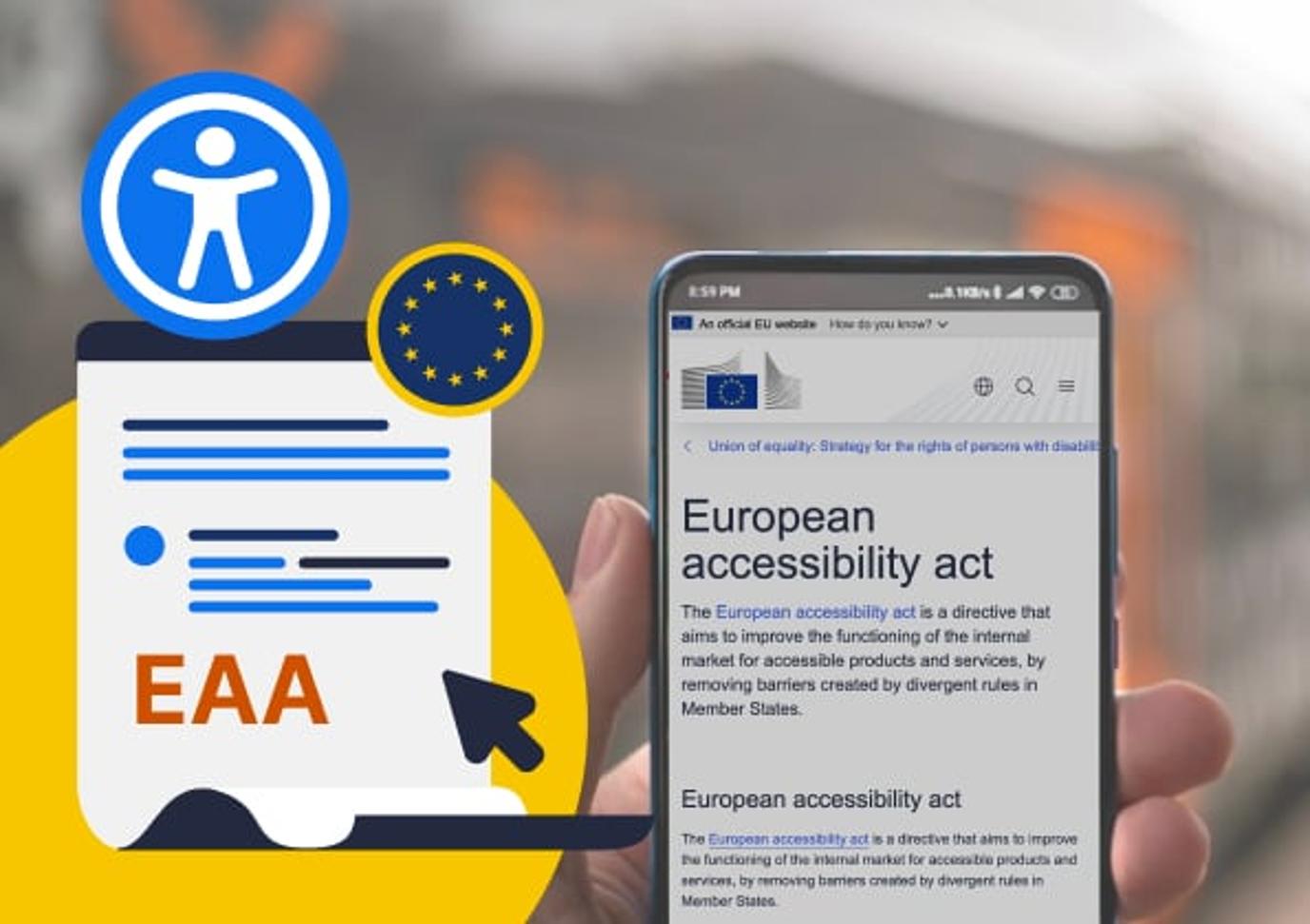
The European Accessibility Act (EAA)
The European Accessibility Act is legislation that sets out common accessibility requirements for a range of products and services in the European Union.
Why online accessibility is a smart marketing move (not just a nice-to-have)
When we talk about online accessibility, it’s often framed as a legal requirement or an ethical obligation, and rightly so. But there’s another dimension that marketers and business owners should be paying attention to: accessibility is also a growth strategy.