Website design.
First impressions matter in website design: it takes the average web user just 0.5 seconds to form an opinion on a website. This is why it is crucial to stand out for the right reasons. We help companies gain the recognition they deserve by creating websites that showcase their products and services while supporting their organisation’s goals.


A dedicated team for your website design.
Founded in 2011, we are a web agency based in Essex, specialising in website design. We take a client-focused approach, ensuring our work directly supports your business goals. While we started with website creation, we have grown by staying true to our ethos: keeping a small, skilled team dedicated to delivering quality. No matter your design direction, we collaborate with you to create a website that is impactful, accessible, and high-performing.
We are a trusted partner for building new websites and enhancing existing ones. Our focus is on designing user-friendly websites that strengthen your online presence. We support businesses across Essex, from Chelmsford to Southend, as well as throughout the UK and internationally.
Every website we design is engaging, search engine optimised, and tailored to fit your budget. Whether you’re launching an MVP, starting a new business, or expanding your services, we provide cost-effective solutions to get your website up and running quickly.

Expert designers
Our team designs websites for any industry, any location and any requirement. For over a decade we have been providing high quality tools to make life easier for customers and business.

Considerate approach
The website audience is the core focus for our work. Delivering a targeted result that meets the needs of the end user is always our goal.

Scalable web solutions
Our websites are purposefully designed to manage high traffic and work effectively as our client’s audience grows or the organisation evolves.
We create unique sites, not pre-built themes.
When it comes to professional web design, there are key factors to consider such as price, features and functionality. Our focused approach promotes a cost-effective long-term strategy which uses strong, secure code and removes the need for bloat that often comes with website builders or pre-built themes. We provide the website you need to scale quickly and successfully.


Laravel.
Laravel is a code-based framework for developing highly bespoke websites. We have been designing Laravel websites for many years: its framework is a lightweight solution optimised for loading speed and security. It has some key benefits such as improving SEO and support for MVC architecture. It also offers the highest level of website security and flexibility.
There is a strong demand for Laravel websites due to its rapidly growing list of features and we are advocates for using it when clients have specific, bespoke requirements.


Wordpress.
WordPress is a popular choice for client-managed websites, offering an easy-to-use platform that’s simple to set up and maintain. It provides a cost-effective solution with a powerful CMS and a wide range of plugins, enabling great results with minimal training.
We design bespoke WordPress websites using a highly secure, lightweight, and flexible in-house theme. This tailored approach ensures any design can be applied while maintaining security and performance. Ideal for MVPs, start-ups, and small businesses, it’s also a great option for projects that prioritise long-term scalability.


Magento / Adobe Commerce.
Magento (or Adobe Commerce) is an open-source PHP platform and a popular eCommerce platform. It comes with a huge list of out-the-box features, extensive third-party integrations and is easy to customise. It is suitable for those who understand development or are more tech-friendly and may require some training to get started.


WooCommerce.
WooCommerce is a plugin developed and supported as part of WordPress. It provides a powerful eCommerce store where you can easily manage inventory, process payments and handle orders. WooCommerce supports various add-ons, from bundle deals to gift voucher systems. Additionally, we can design and develop custom plugins tailored to your specific needs.
If you are familiar with WordPress, then WooCommerce is incredibly easy to navigate. Whether you want to review orders, look at monthly reports or try to work out what your most popular products are, WooCommerce offers a quick setup and easy-to-use solution to get started.
Talk to us about your website
Start a conversation with us about your website project. We can guide you through options, share ideas, and help you shape a clear plan that fits your goals.
View our previous work.
 Find out more about:
Client name withheld at their request.: Website redesign and rebuild
Client name withheld at their request.
Website redesign and rebuild.
- Accessibility
- Web design
- Web development
 Find out more about:
Crossroads Care Northern Ireland: Website redesign and rebuild
Crossroads Care Northern Ireland
Website redesign and rebuild.
 Find out more about:
Gibbons Engineering Group: Website redesign and rebuild
Gibbons Engineering Group
Website redesign and rebuild.
- Web design
- Web development
 Find out more about:
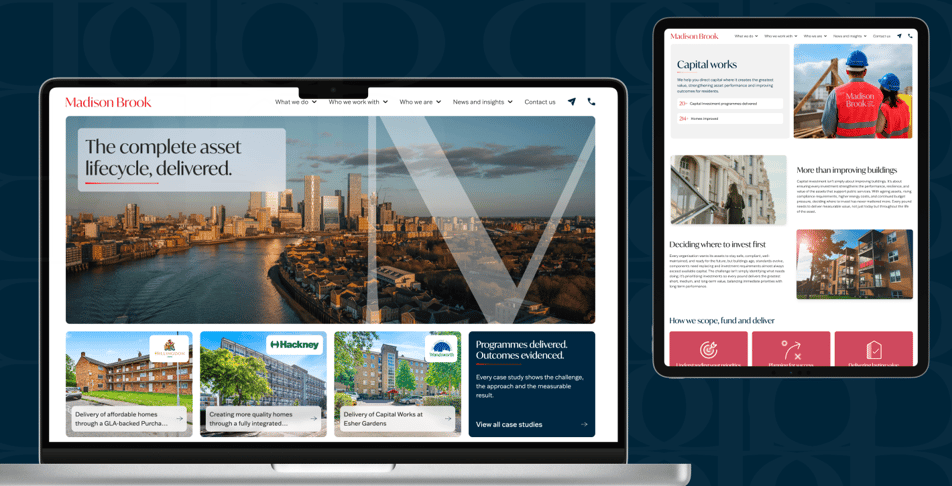
Madison Brook: Website redesign and rebuild
Madison Brook
Website redesign and rebuild.
- Accessibility
- UX
- Web design
- Web development
 Find out more about:
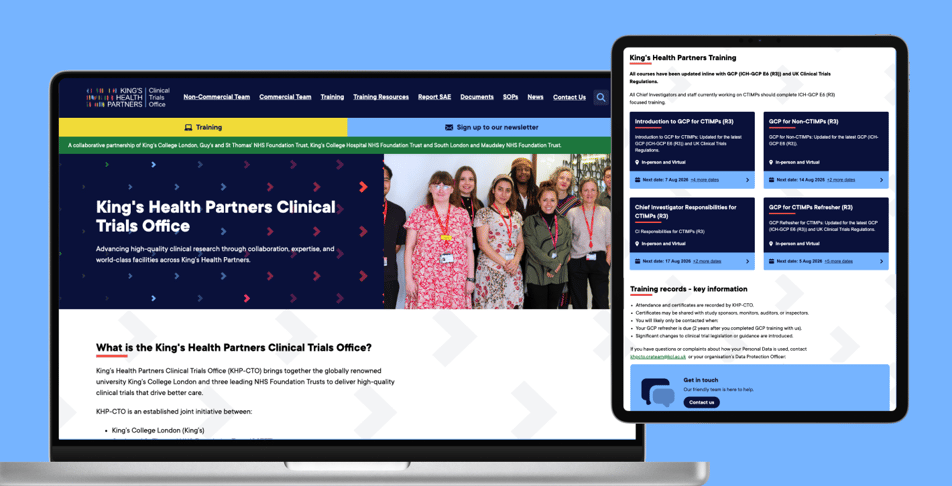
The King’s Health Partners Clinical Trials Office: Website redesign and rebuild
The King’s Health Partners Clinical Trials Office
Website redesign and rebuild.
- Accessibility
- Support and maintenance
- Web design
- Web development
 Find out more about:
Rofinery: SaaS platform
Rofinery
SaaS platform.
- AI
- Web development
More than a decade of trusted relationships









Website design FAQs.
Find answers to common questions about our website design services – from how we approach accessibility and branding to what’s included in the design process.
You don’t need a full brand identity before designing a website, but you do need the basics: a logo, a colour palette and fonts. Without them, the website has nothing consistent to build on. If your branding is outdated or inconsistent, it’s usually best to refresh it before or alongside the website, so both launch together.
Brands designed mainly for print often need extending for the web, with digital colour values, web fonts, button styles and icon sets. Brand colours also need checking against accessibility requirements. Text needs a contrast ratio of at least 4.5:1 under WCAG, and some brand palettes fail this. Fixing that at the branding stage is far easier than changing established colours later.
We Create Digital can create or refresh your branding as part of a website project, or work within your existing brand guidelines. Talk to us about where you’re starting from.
A bespoke website is designed and built from scratch for one organisation, rather than adapted from a pre-made template or theme. Every page layout, feature and line of code is created around that organisation’s brand, audience and goals, so the website looks unique and works exactly the way the business needs it to.
Template websites are quicker and cheaper to launch, but they often carry code and features you don’t need, which slows pages down and makes the website harder to secure and change later. A bespoke website includes only what’s needed, so it tends to load faster, perform better in search and scale more easily as the organisation grows. The trade-off is a higher upfront cost and a longer build, which usually pays back for organisations whose website is central to how they win customers.
We Create Digital builds every website bespoke, without off-the-shelf themes. See examples in our case studies, such as Gibbons Engineering Group and Madison Brook.
The web design process usually has six stages: discovery, planning and wireframes, visual design, development, testing and launch. Discovery establishes your goals and audience. Wireframes map out the structure of each page, and visual design applies your brand. Development builds the working site, testing checks it across devices, and launch puts it live.
Wireframes are simple layouts that show where content and features sit on a page before any visual design begins. They make it easy to agree structure and user journeys early, when changes are quick and cheap. Each stage should end with a clear sign-off, so nothing comes as a surprise later. A good process also includes content planning, SEO, accessibility checks throughout and support after launch, as covered in the Nielsen Norman Group’s guidance on UX design. Our article on when to redesign or rebuild covers the planning stage in more detail.
At We Create Digital, every project follows this process with sign-offs at each step and a dedicated project manager. Find out more about how we work.
Most business websites take between 8 and 12 weeks to design and build, from discovery to launch. A small brochure site can be completed more quickly, while larger websites with ecommerce, integrations or bespoke functionality can take several months. Delays usually come from content, feedback or sign-off rather than the build itself.
The timeline depends on the number of page templates, the complexity of the functionality and how much content needs writing or migrating. It also depends on how quickly decisions are made on your side. Having content, branding and a named decision-maker ready before the project starts is the most effective way to keep it on schedule. A clear plan with milestones and sign-off dates at the start makes the launch date predictable.
We Create Digital sets out a schedule with defined milestones before work begins, so you always know when your website will go live. Get in touch to discuss your timeline.
Web design is about how a website looks and works for users: the layout, visual style, navigation and user experience. Web development is about building it: writing the code, setting up the content management system and creating the functionality behind the scenes. Most websites need both, and many agencies provide them together.
Designers typically work in tools such as Figma to create wireframes and visual designs. Developers turn those designs into working pages. Front-end development covers what users see in the browser, using HTML, CSS and JavaScript, while back-end development covers the server, database and functionality such as forms, payments and integrations. Keeping design and development in the same team reduces the risk of designs being changed or compromised during the build.
We Create Digital’s designers and developers work in one UK-based team. Find out more about our web development services.
A good website design makes it quick and easy for visitors to find what they need and take action, whether that’s buying, booking or getting in touch. The essentials are clear navigation, a strong visual hierarchy, readable text, fast loading pages, a responsive layout and obvious calls to action, all reflecting a consistent brand.
Good design is judged by how well a website works, not just how it looks. Visitors decide within seconds whether to stay, so the purpose of each page needs to be clear immediately. Slow pages lose people fast: Google found that 53% of mobile visits are abandoned after three seconds. Accessibility, trust signals such as reviews and case studies and clear contact details all make a difference too. The Nielsen Norman Group’s usability heuristics are a widely used benchmark for judging design quality.
Want to know how your current website measures up? A We Create Digital website MOT reviews its performance, UX, accessibility and SEO, and gives you a prioritised action list.
A website redesign can affect Google rankings if URLs, content or site structure change without a migration plan. A well-managed redesign usually protects rankings and often improves them. The essential steps are mapping every old URL to its new equivalent with 301 redirects, preserving valuable content and testing thoroughly before launch.
Google’s guidance on moving a site with URL changes recommends redirect mapping, updated sitemaps and monitoring after launch. Benchmark your rankings and traffic in Search Console beforehand, carry over metadata and structured data, and watch for crawl errors in the weeks after go-live. Content migration needs planning too: images should be optimised and pages restructured for accessibility and SEO, rather than copied across as they are. Some short-term fluctuation is normal while Google recrawls the site.
We Create Digital’s SEO team plans the migration as part of every redesign, so your new website launches without losing the visibility you’ve built.
Latest industry insights.
Explore the forefront of industry trends and innovations through our latest blogs where we unpack cutting-edge strategies, share expert perspectives and keep you informed.
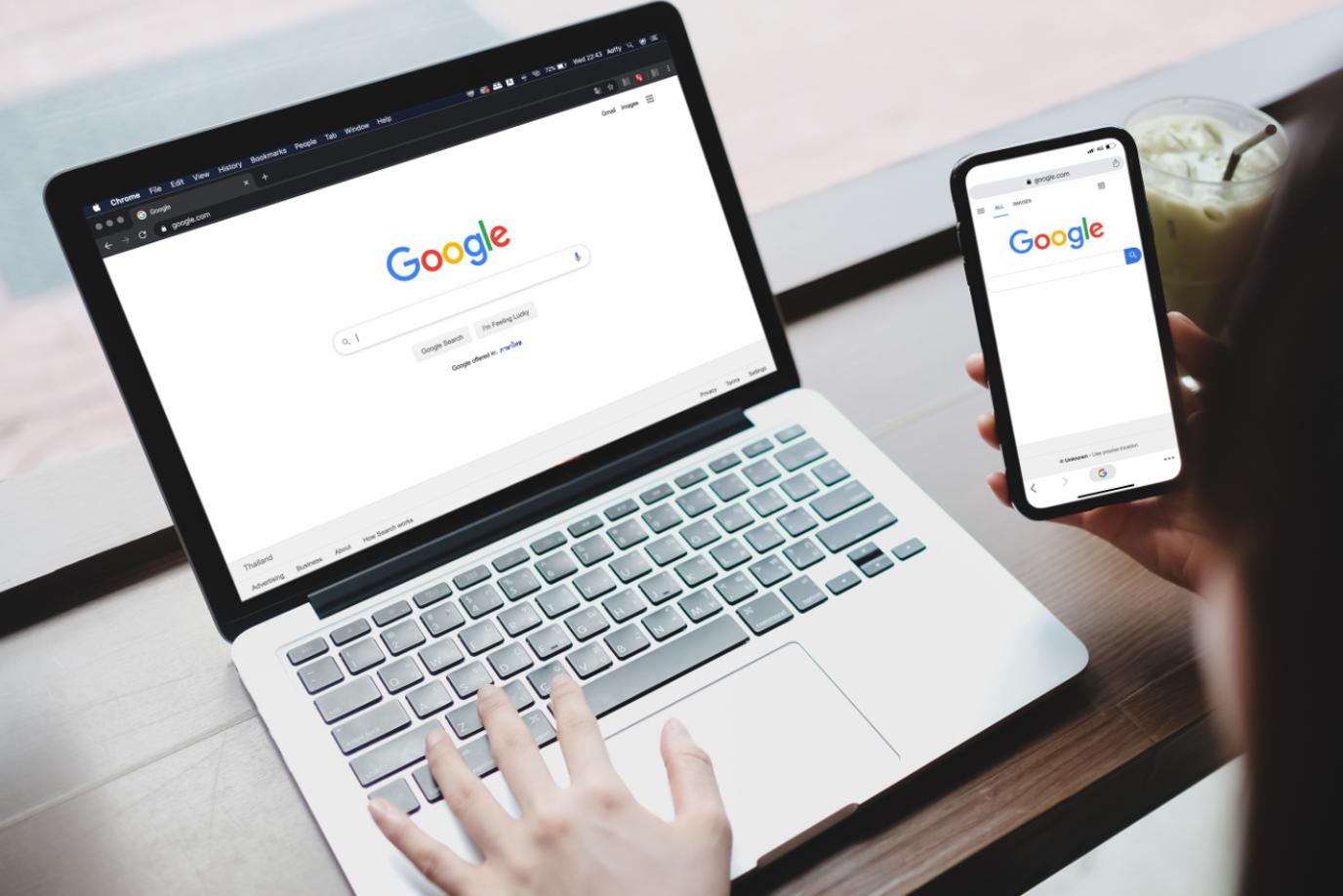
Your ads aren’t the problem. Your website is.
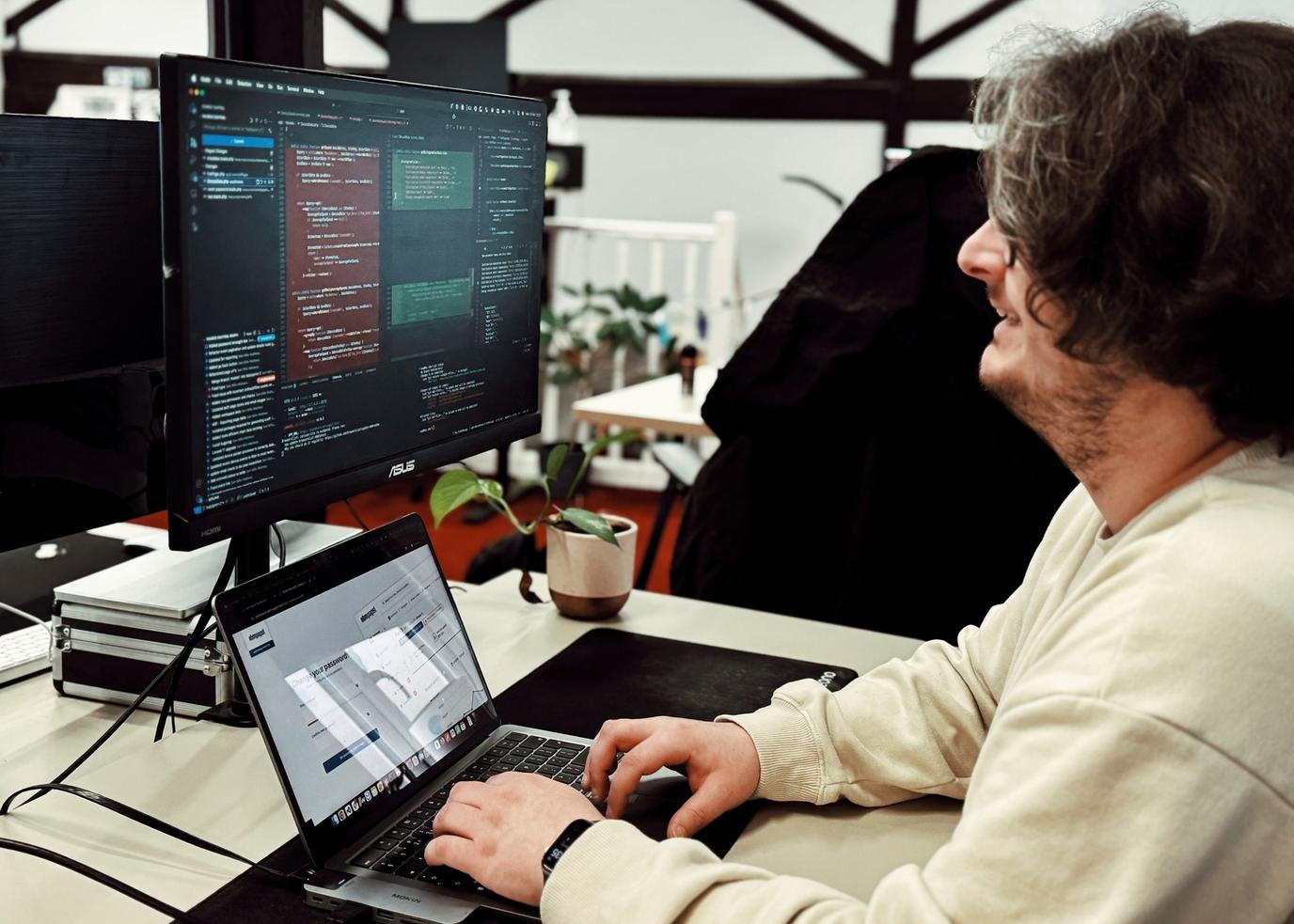
What is PHP, and why does your website need upgrading?