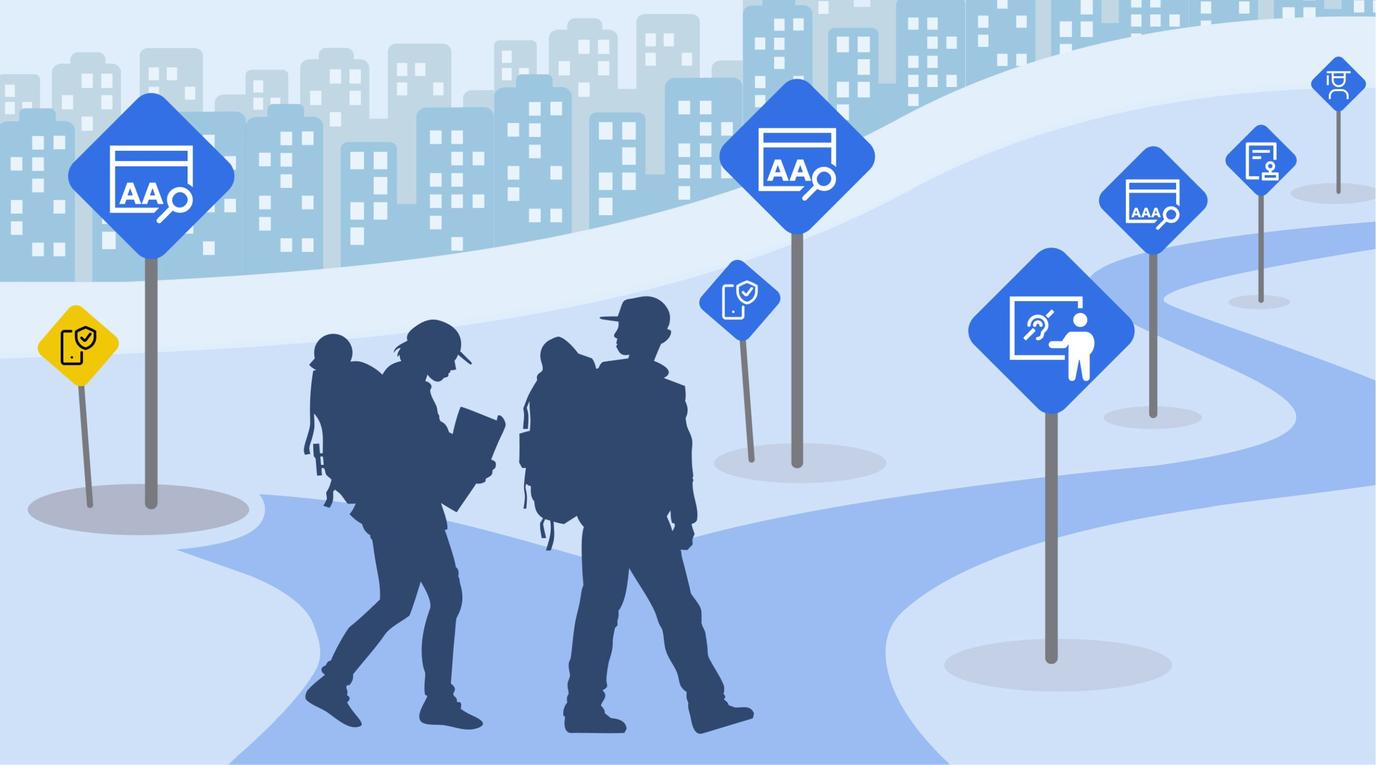
The list of accessibility acronyms is long - ADA, Section 508, the European Accessibility Act, EN 301 549. They sound like different requirements from different rulebooks. In practice, they're different contexts for the same underlying standard.
We speak to a lot of businesses trying to work out which accessibility standard applies to them. The list of acronyms doesn’t help. ADA, Section 508, the European Accessibility Act, VPAT, EN 301 549.
They sound like different requirements. In practice, they’re different contexts for the same underlying standard, and they all lead back to WCAG.
Why there are so many acronyms
The reason for all the acronyms comes down to different legal frameworks, different regions, different sectors. The US has the ADA and Section 508. The EU has the European Accessibility Act. The UK has the Public Sector Bodies Accessibility Regulations. Each one has its own name, scope, and enforcement mechanism.
But the technical benchmark they reference is the same.
WCAG, the Web Content Accessibility Guidelines, is published by the W3C and defines what accessible digital content actually looks like in practice: colour contrast, keyboard navigation, screen reader compatibility, text alternatives, form behaviour etc. It was developed through an open, internationally collaborative process, it’s based on real research, and crucially, it’s testable. You can look at a piece of content and determine whether it passes or fails.
When regulators in various countries needed a technical standard to put inside their legislation, WCAG was the obvious choice. It was already there, already credible, and already widely used. So rather than invent their own criteria, they adopted it.
That’s why the ADA, Section 508, EN 301 549, the EAA, and the UK accessibility regulations all point, in different ways, to the same thing.
What each of them actually requires
The ADA doesn’t name WCAG explicitly, but US courts and the Department of Justice have consistently treated WCAG 2.1 AA as the applicable standard for digital content. Section 508 applies to US federal agencies and organisations that supply them with technology. It was updated in 2017 to formally adopt WCAG 2.0 AA, and in practice most organisations align to 2.1, but we recommend focusing on 2.2.
EN 301 549 is the European technical standard for ICT accessibility. It maps directly to WCAG 2.1 AA for web content and forms the backbone of the European Accessibility Act. If you’re selling digital products or services into the EU, this is the standard you need to meet – and meeting WCAG 2.1 AA really does mean meeting it.
The UK’s Public Sector Bodies Accessibility Regulations explicitly require WCAG 2.2 AA. There’s no interpretation required here; it’s written into the legislation.
VPAT is a document format used in US procurement, where vendors self-report how a product meets Section 508 requirements. This is not a standard, but it’s a way of showing compliance against one.
So where do you start?
If you’ve been told you need to be compliant, the framework you’ve been cited matters less than you might think. Whether someone has mentioned the ADA, the EAA, Section 508, or the UK regulations, the starting point for us is always the same: WCAG 2.2 Level AA.
However, the legal context still matters. This is because different frameworks have different deadlines, exemptions, and enforcement histories. The EAA covers private sector organisations in scope in a way the UK regulations don’t. The ADA has a long litigation track record that the others don’t yet share. Those aspects are worth understanding for your specific situation. It also might be you actually don’t need to be compliant, it is simply that you really should be. Again, the UK doesn’t have a requirement for private organisations and businesses to be compliant – but in the EU, there is such a requirement. Yet even in the EU, there are exemptions – it does not apply to every single website.
Wherever you are and whatever sector you are in, the technical work would be the same regardless.
Build to WCAG 2.2 AA and you’ve met the core requirement of the requirements in any country. Start by understanding where your current website sits against that standard. An accessibility audit will tell you where the failures are and how significant they are, and from there you can prioritise and plan.
If you’re not sure what the specific obligations are for your organisation, or where to begin, get in touch. We can help you work it out.