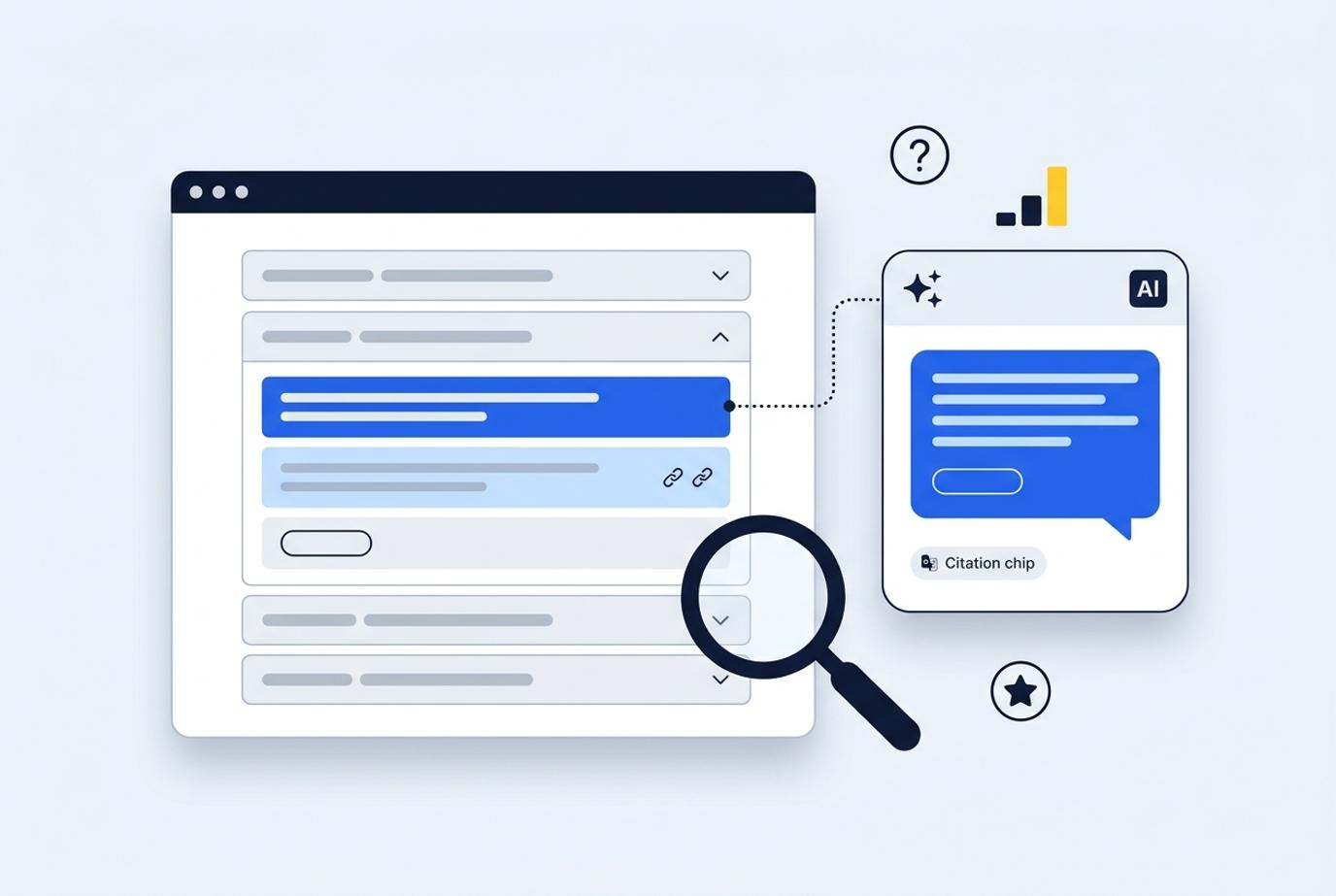
Most businesses treat ads and content as two versions of the same thing: ways to get found online. They're not. One stops the moment you stop paying. The other keeps working.
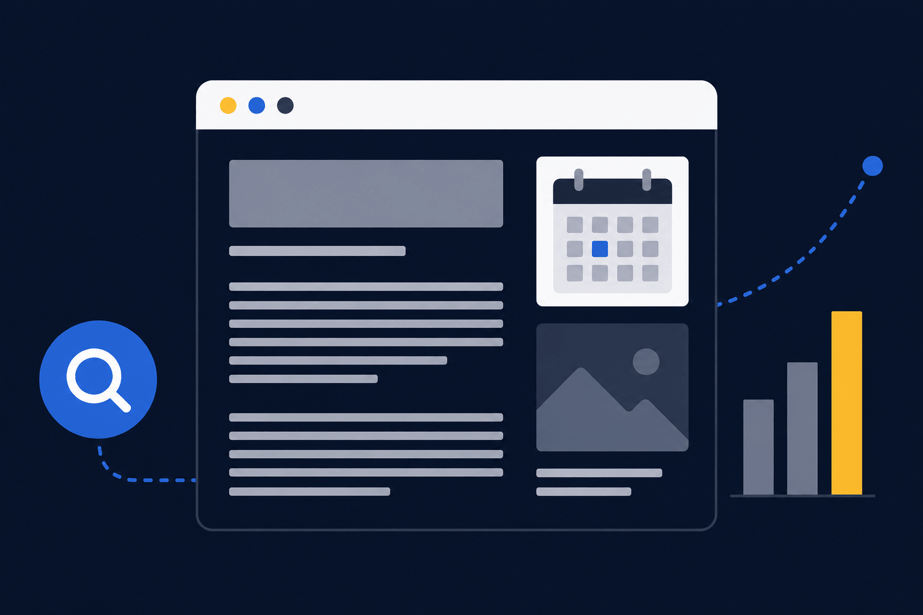
Switch off your Google Ads campaign and see what happens. The enquiries stop – almost immediately. It’s like turning off a tap.
That’s not a criticism of Google Ads. They work. But it’s worth considering what that moment actually reveals: the visibility you were paying for didn’t belong to you. It was rented, and the landlord (Google) has very straightforward terms.
Compare that with something a client said to us recently. They’d published a blog post three years ago answering a question their customers kept asking. They’d almost forgotten it existed – but it was still bringing them qualified traffic every month. Because it was there, and it was useful, and Google knew people wanted it.
That’s the difference between renting visibility and owning it.
Why ads are a short-term answer to a long-term problem
Paid search is excellent at a specific thing: putting you in front of people who are ready to buy right now, today, for a term you’ve bid on. If you need enquiries in the next 30 days and your organic presence isn’t there yet, ads are a reasonable answer.
The problem isn’t that ads don’t work. It’s that they can’t do certain things.
They can’t answer the questions people ask before they’re ready to buy. They can’t reach someone who’s three months away from a decision, doing research, building a shortlist. They can’t help a potential client who Googles you after a referral and wants to know whether you actually know your stuff. And they don’t compound. The money you spent on ads last year has left no trace. However, the content you published last year is still working.
For most businesses, the buying journey isn’t a single search. It’s a process. Someone hears about a problem, starts researching solutions, compares options, and eventually makes a decision. That journey happens across many searches over many weeks, and most of those searches aren’t the ones you’d bid on. They’re questions. They’re comparisons. They’re the kind of thing people type in when they’re thinking something through, not when they’re ready to click a contact form.
Content is how you show up for that whole journey, not just the end of it.
What Google is actually rewarding
It’s worth being clear about what Google is trying to do, because it shapes everything else. Google’s job is to return the most useful, reliable answer to whatever someone searched for. Its entire business model depends on people trusting that what appears in search results is worth their time.
This is why Google has put so much weight on what it calls E-E-A-T: experience, expertise, authoritativeness, trustworthiness. It wants to know that the sites it ranks are genuinely knowledgeable about what they’re covering, not just technically optimised. A website with no content – or thin, generic content – gives Google very little to work with.
A well-maintained blog does something useful: it demonstrates expertise in a visible, legible way. When you write about the questions your clients actually ask, the decisions they need to make, the things that go wrong and why, you’re not just being helpful to the reader. You’re giving Google evidence that you know what you’re talking about. Over time, that evidence accumulates.
This is why businesses with consistent content tend to see organic visibility grow steadily over months and years, while businesses that only rely on their homepage and a services page tend to stay flat, or decline as competitors who are publishing begin to pull ahead.
What about AI search?
The conversation in marketing circles has, inevitably, shifted to AI – how you show up in ChatGPT, Perplexity, Google’s AI Overviews. It’s a legitimate conversation and one that is expected given the rapid changes with AI. However, it doesn’t change the argument for content and if anything, it strengthens it.
This is because when an AI search tool answers a question, it draws on existing web content. It doesn’t draw on ad campaigns. There is no paid route into an AI-generated answer (focusing on organic AI results because AI ads are now here). The businesses that get cited are the ones that have published clear, specific, credible content about their area of expertise. Which means everything that makes content valuable for traditional search also makes it valuable for AI search.
A website with no blog, no articles, no published thinking – just a homepage and a services page – is essentially invisible to AI search. It gives the tools nothing to understand, summarise, or cite. The irony is that businesses investing heavily in ads, and nothing in content, are building exactly the kind of web presence that AI search ignores most completely.
Furthermore, AI has changed is the bar for what good content looks like. Generic, thin, or derivative content is easier than ever to produce – and easier than ever for search engines and AI tools to identify and deprioritise. It can end up being more harmful than beneficial. What organisations need to produce is content that clearly explains and shows who they are, what they do, and why their perspective matters. That is the same as it was, but the message is more crucial now given the focus often appears to be quantity over quality.
The objection worth addressing
The most common pushback we get is straightforward: content takes time, and businesses need results now.
That’s fair, and it’s why we’d never suggest content is a replacement for ads if there’s an immediate commercial need. The honest version of the argument isn’t “do content instead of ads.” Ads and content serve different purposes, and confusing them for each other can be distracting and take you down the wrong path.
Ads buy time. Content builds something durable. The businesses that do this well tend to use ads to cover the short-term need while investing in content that reduces their dependence on ads over time. Over two or three years, the content starts to carry more of the weight. The cost per lead from organic traffic goes down. The dependency on ad spend goes down with it.
That shift happens when there is a content strategy that’s actually connected to how people search. It isn’t just a blog that publishes when someone has time, and it is not down to AI-generated articles that say nothing specific. It comes from content that answers real questions, reflects genuine expertise, and treats readers as people who are trying to make a decision.
The businesses that don’t blog are invisible in ways they can’t see
There’s a particular kind of invisibility that’s easy to miss: long-tail searches. These are the specific, often longer queries that don’t have enormous search volume but add up to a significant proportion of how people actually find things. “How long does a website redesign take.” “What should I include in a digital marketing brief.” “Is it worth paying for SEO if my business is local.”
These searches rarely trigger ads. They’re too specific, too varied, and the commercial intent is too early in the journey. But they’re exactly the kind of thing a potential client might search when they’re starting to think about something.
If there’s content that answers those questions, you’ll appear. If there isn’t, you won’t – and you’d have no way of knowing what you were missing.
What good content actually looks like
We’ve covered this a little already in the above, but the content that builds visibility over time tends to share a few characteristics. It’s specific rather than generic. It comes from a real point of view, not a neutral summary of what everyone else has said. It takes the reader somewhere – it helps them understand something, make a decision, or see their situation differently. And it’s consistent. Not necessarily frequent, but regular enough that there’s always something new for search engines and AI tools to find.
What it doesn’t look like is a blog that publishes four articles in January (probably on the same day) and then nothing until September. Or posts that cover topics only tangentially related to what the business actually does. Or content written to hit a word count rather than to say something.
The question we’d suggest asking about any piece of content is simple: would someone find this useful when they’re trying to decide something? If yes, it has a reason to exist. If not, it’s noise – and search is increasingly good at telling the difference.
The longer you wait, the more ground you give away
Organic visibility takes time to build. It’s important to be honest about it rather than pretending otherwise as otherwise expectations are met and then missed. The content you publish today might take three to six months to rank for anything meaningful. Which means the best time to start was last year, but the second-best time is now.
Every business in your sector that has been publishing consistently for the last two or three years has been quietly and gradually building an advantage. It might not be a dramatic one, and it is doubtful that you’d notice it month to month, but it does compound, just like interest on your savings. They have more indexed pages. They have more inbound links. They have more evidence so therefore, in Google’s eyes – and in AI search tools’ understanding, they deserve to be found.
That gap won’t close overnight if you begin today. But it will close, if you start.
If you’ve been relying on ads for visibility and want to understand what a content strategy would actually look like for your business – what to write, who to write it for, and how to build something that works over time – talk to us about a content strategy.